
Shigaraki Seinenryo / Beauty Born from Nature
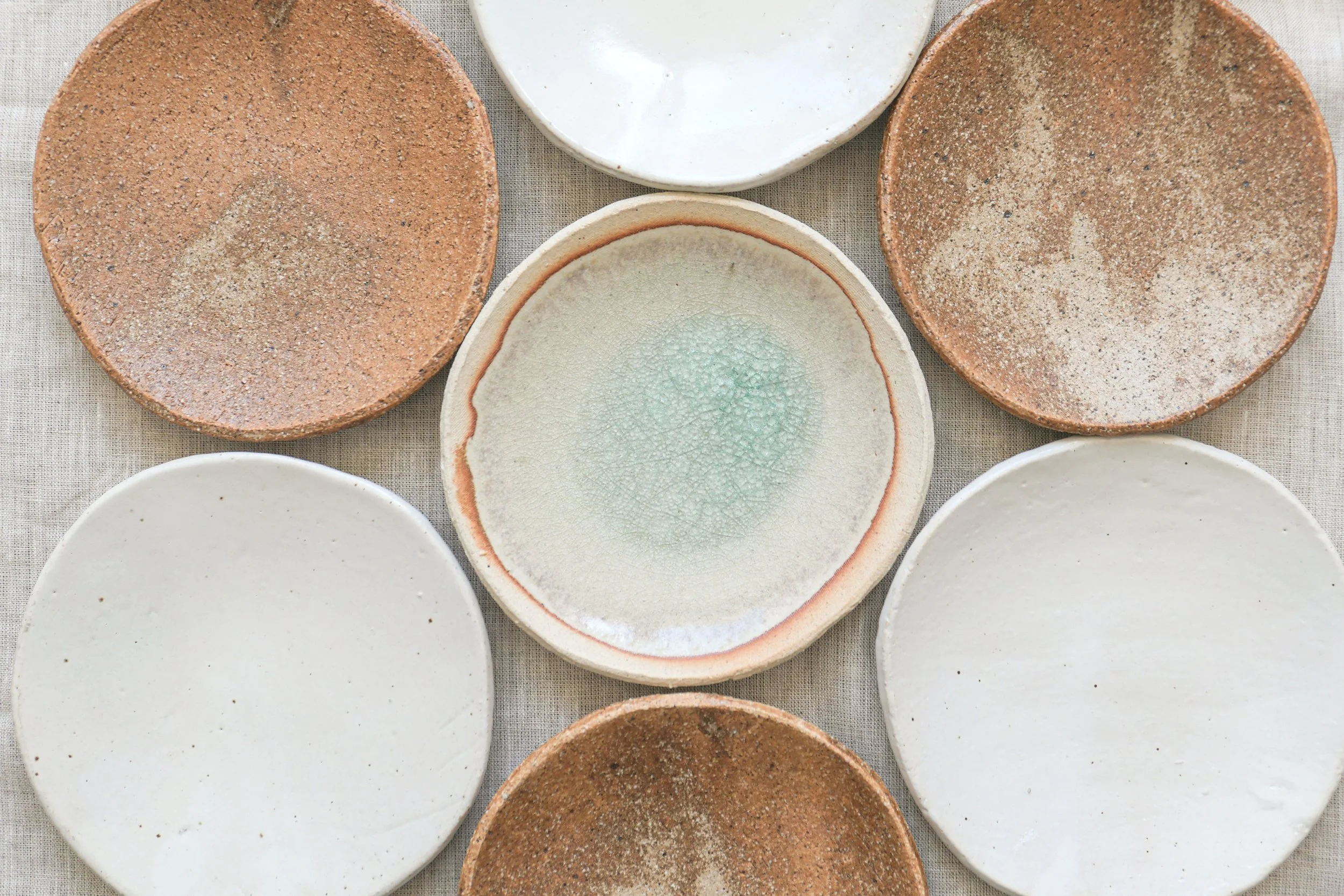
Shigaraki ware from Shigaraki Seinenryo
The first collection at MADOI is Shigaraki ware from Shigaraki Seinenryo. Ceramics from one of Japan's oldest pottery towns, born in a unique workshop, shaped by many hands.
A Town with 800 Years of Pottery
Shigaraki is one of Japan's oldest pottery towns, located in Shiga Prefecture, near the country's largest lake. The combination of rich clay soil and proximity to Kyoto — the heart of Japanese culture and commerce in the old days — allowed Shigaraki to flourish as a centre of ceramic craft from as early as the 13th century.
Shigaraki ware is known for its simplicity. Unglazed surfaces, earthy browns, and textures shaped by hand and fire. Each piece is fired in a kiln, and what emerges is never entirely predictable. Dents, irregularities, unexpected colours: these are not flaws. They are the marks of nature's involvement in the making.
If you love Japan, you may have come across the tanuki — the round, cheerful raccoon dog figurine that has become one of Shigaraki's most iconic creations. Visit the town, and you will find them lined up everywhere.
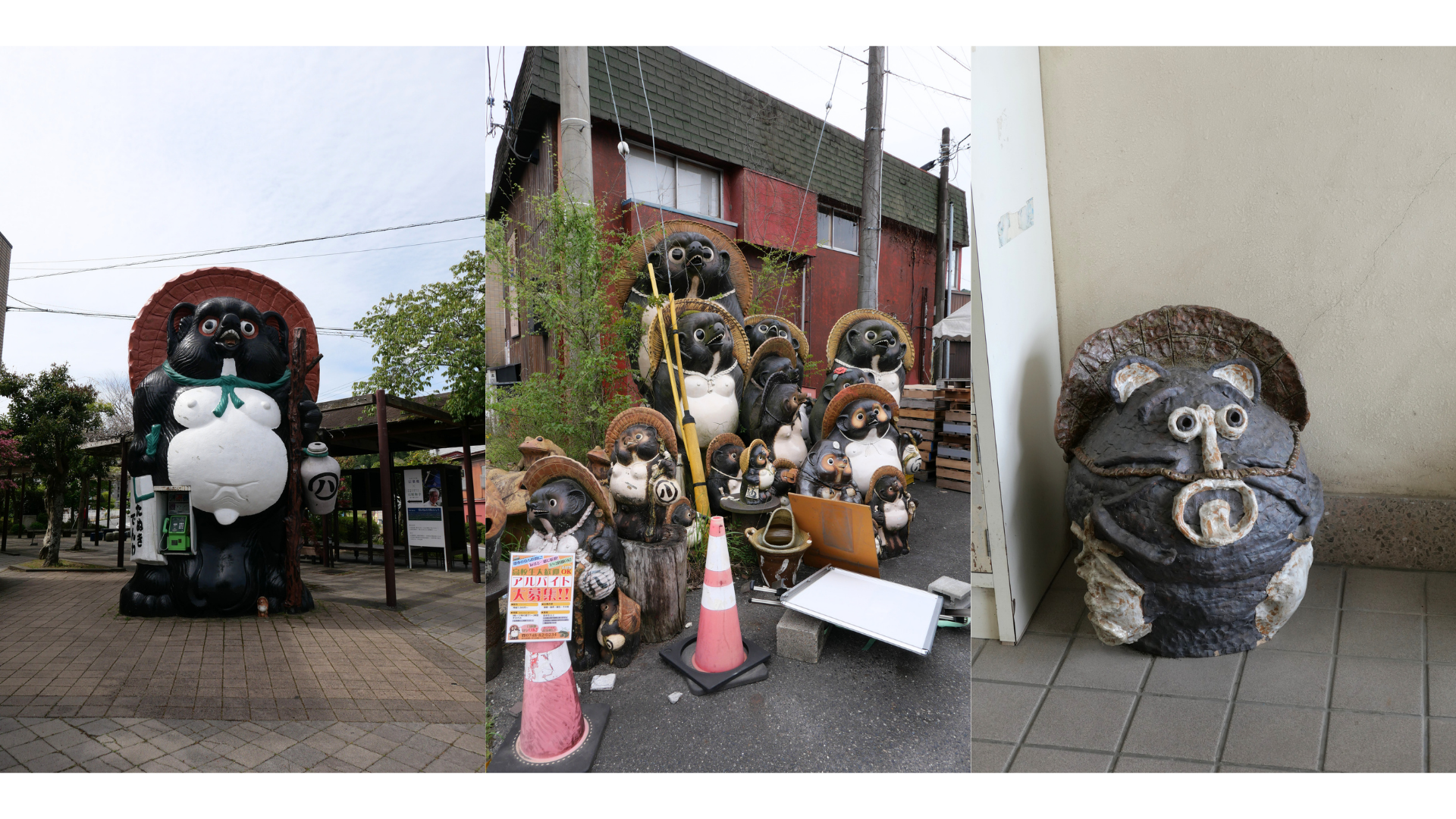
Tanuki I met in Shigaraki. The one on the far right is made by Shigaraki Seinenryo.
Wabi-Sabi: Finding Beauty in Imperfection
Japan has a word for this: wabi-sabi. It is made of two ideas. Wabi — finding richness and meaning in simplicity, in the unadorned, in what remains when the unnecessary is stripped away. Sabi — finding beauty in the passage of time, in things that age, weather, and change.
Some people say that Shigaraki ware is one of the truest expressions of wabi-sabi. It was treasured as a vessel for the tea ceremony, where simplicity and mindfulness are at the core of its philosophy. To hold a Shigaraki cup is to hold something that does not pretend to be perfect — and that is precisely what makes it beautiful.
Workshop: Shigaraki Seinenryo
The Shigaraki ware carried by MADOI come from 信楽青年寮 (Shigaraki Seinenryo) — a workshop with a story as meaningful as the pieces it produces.
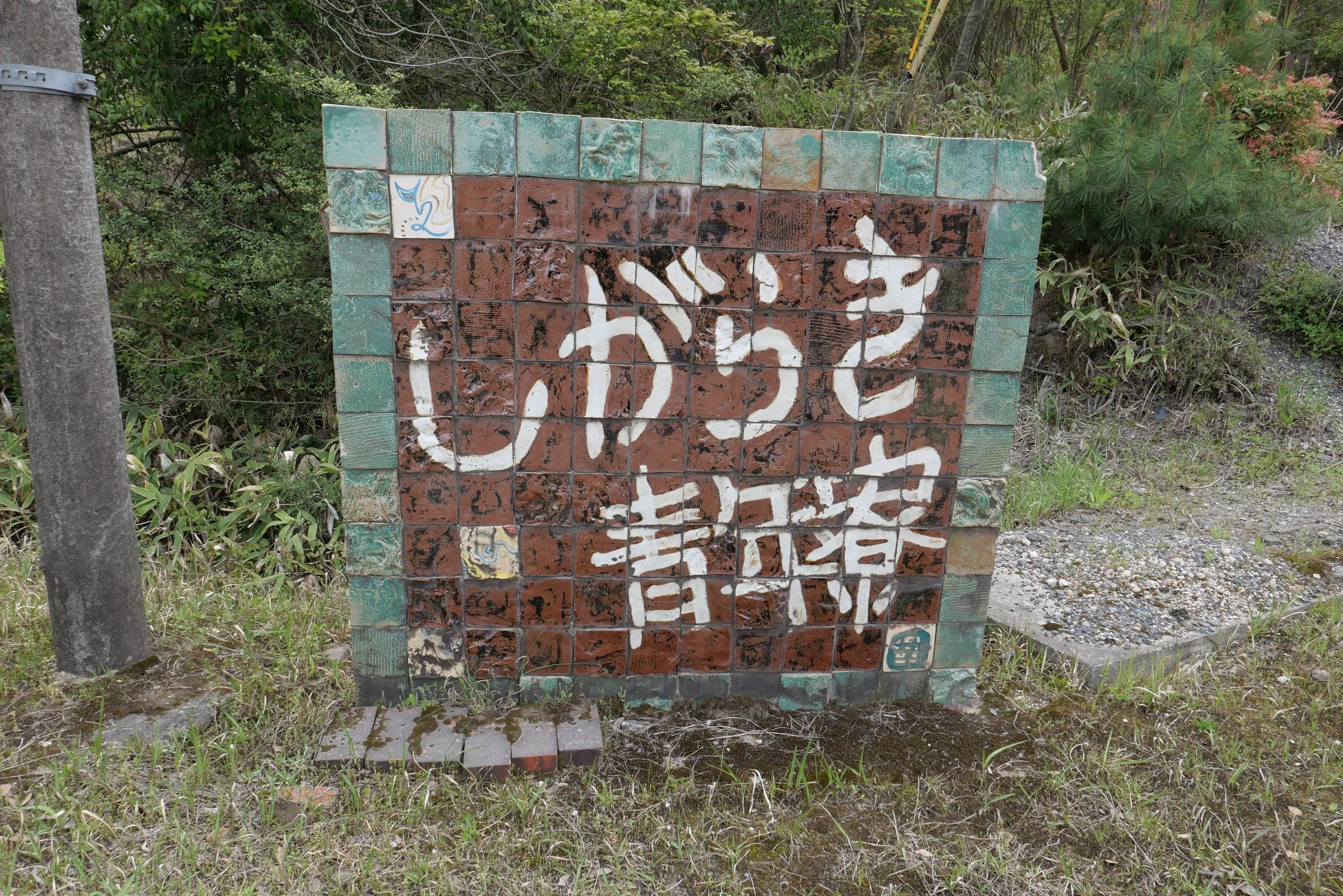
“Shigaraki Seinenryo”
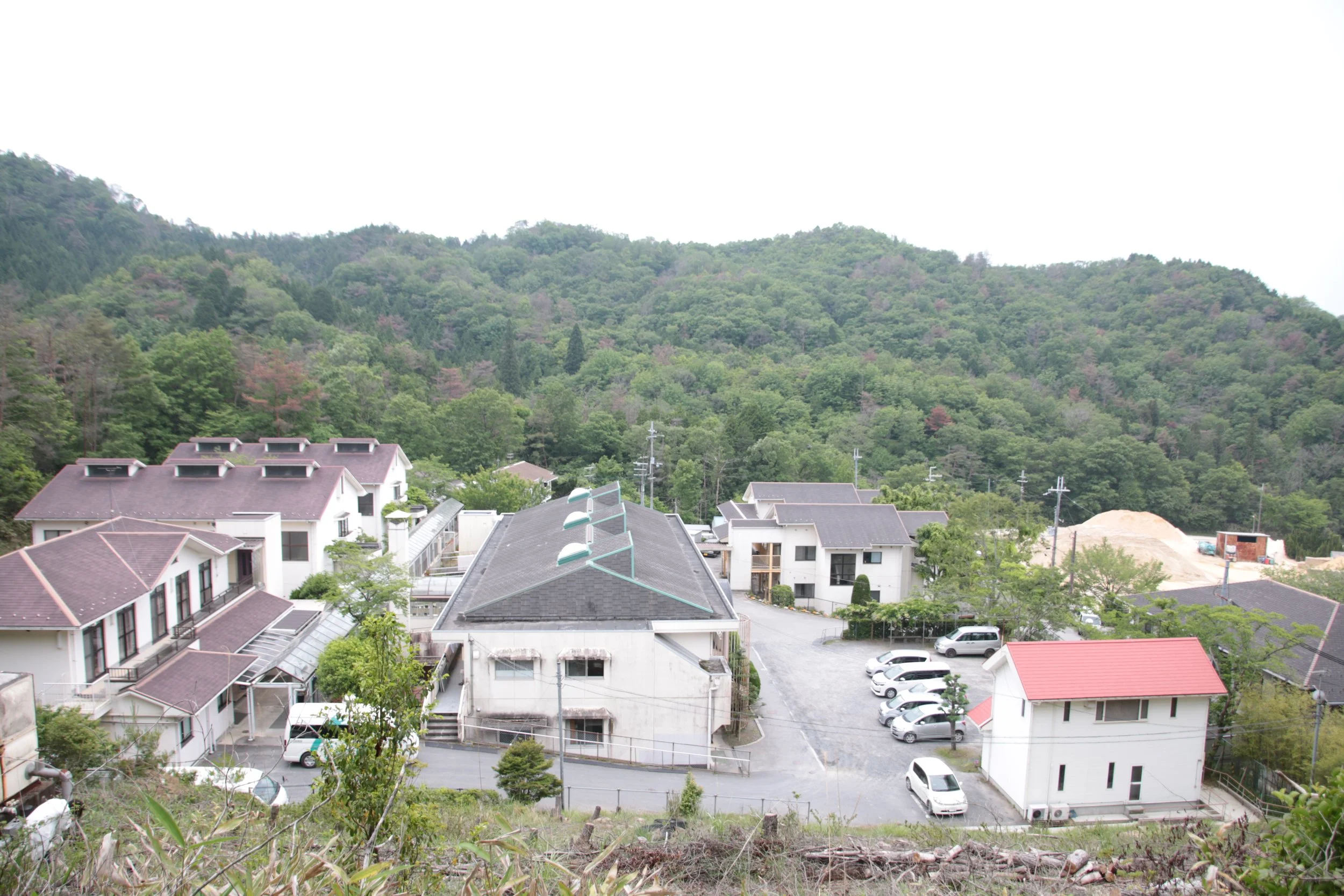
Shigaraki Seinenryo, nestled in the mountains, surrounded by nature.
Founded around 70 years ago, Shigaraki Seinenryo began not as a pottery studio, but as a welfare facility, a place dedicated to creating meaningful work for people with disabilities. At a time when such opportunities were rare in Japan, it pioneered a model of community integration, partnering with local ceramic workshops so that its members could work alongside the town's craftspeople.
Over the decades, Shigaraki Seinenryo became known across Japan as a leader in inclusive local employment. Welfare professionals from across the country came to learn from its approach. The town of Shigaraki and its ceramics community became inseparable from this story of people working and belonging together.
Today, as some members have aged and working at a local workshop has become more difficult, production takes place within Shigaraki Seinenryo itself. Many of the potters have been working with Shigaraki clay for decades.
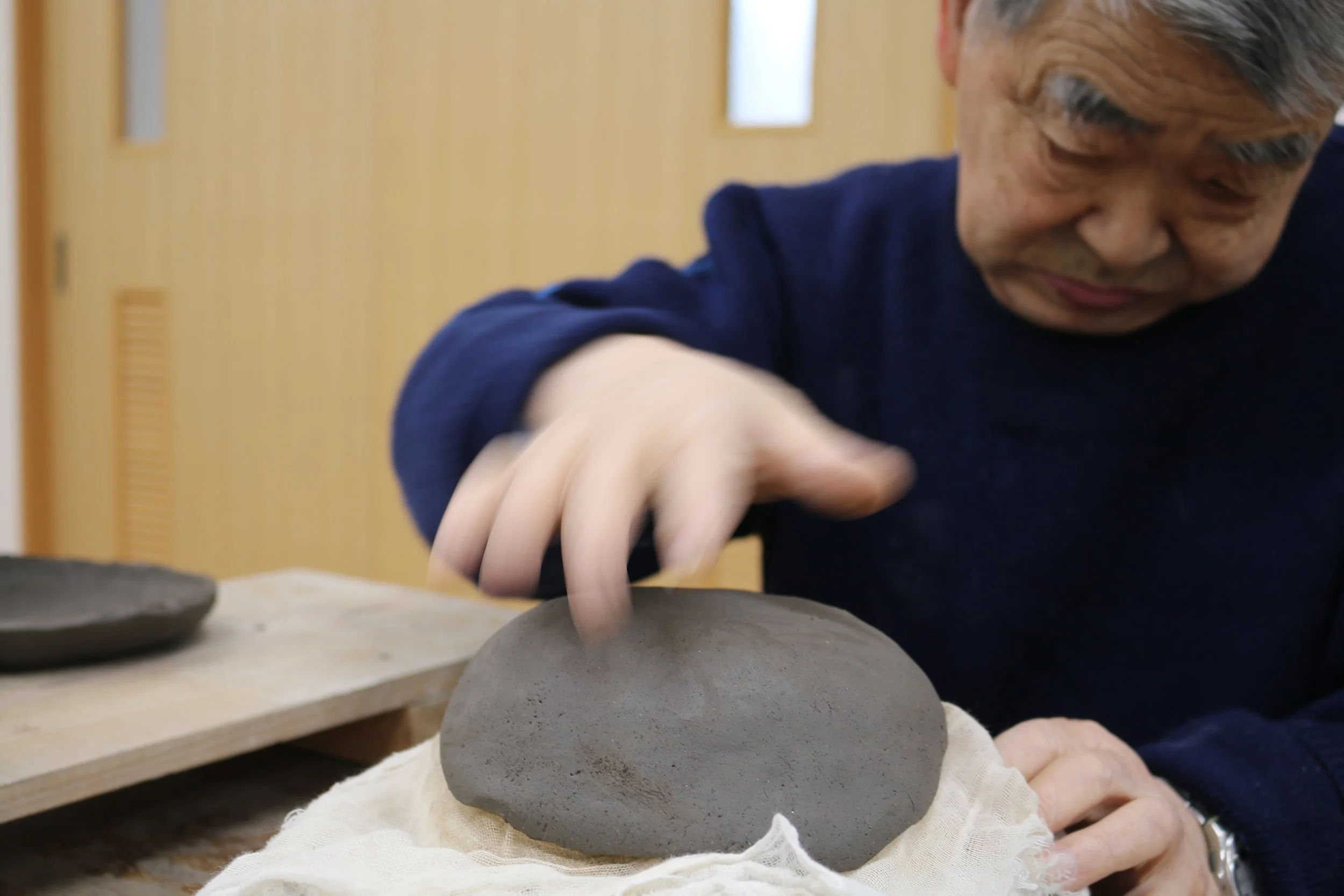
At work in Shigaraki Seinenryo
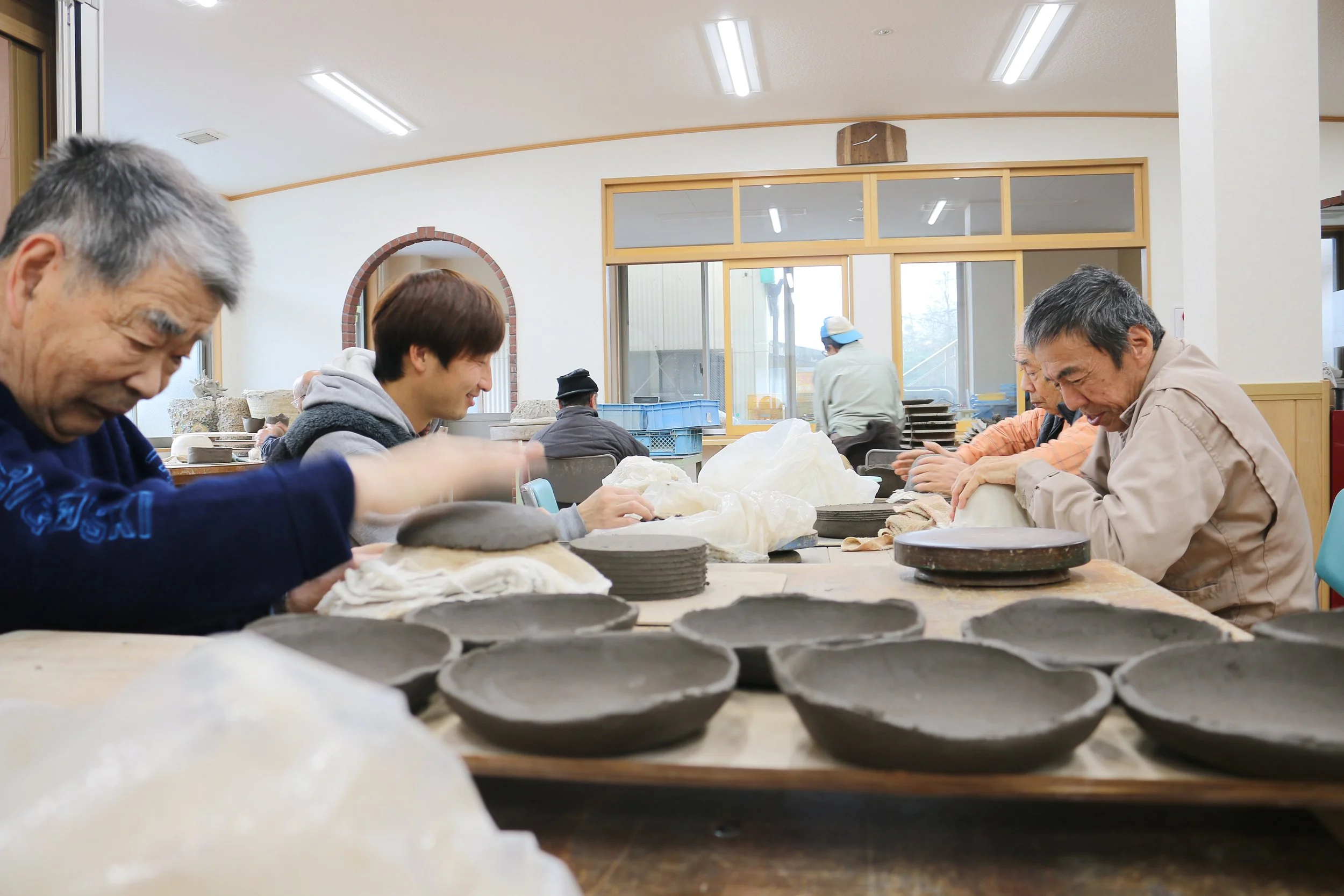
At work in Shigaraki Seinenryo
At Shigaraki Seinenryo, the process of making is carefully divided: slicing clay, pressing it into moulds, smoothing edges with a sponge, loading the kiln. Each step is carried out by different hands, in a relay of skill and care.
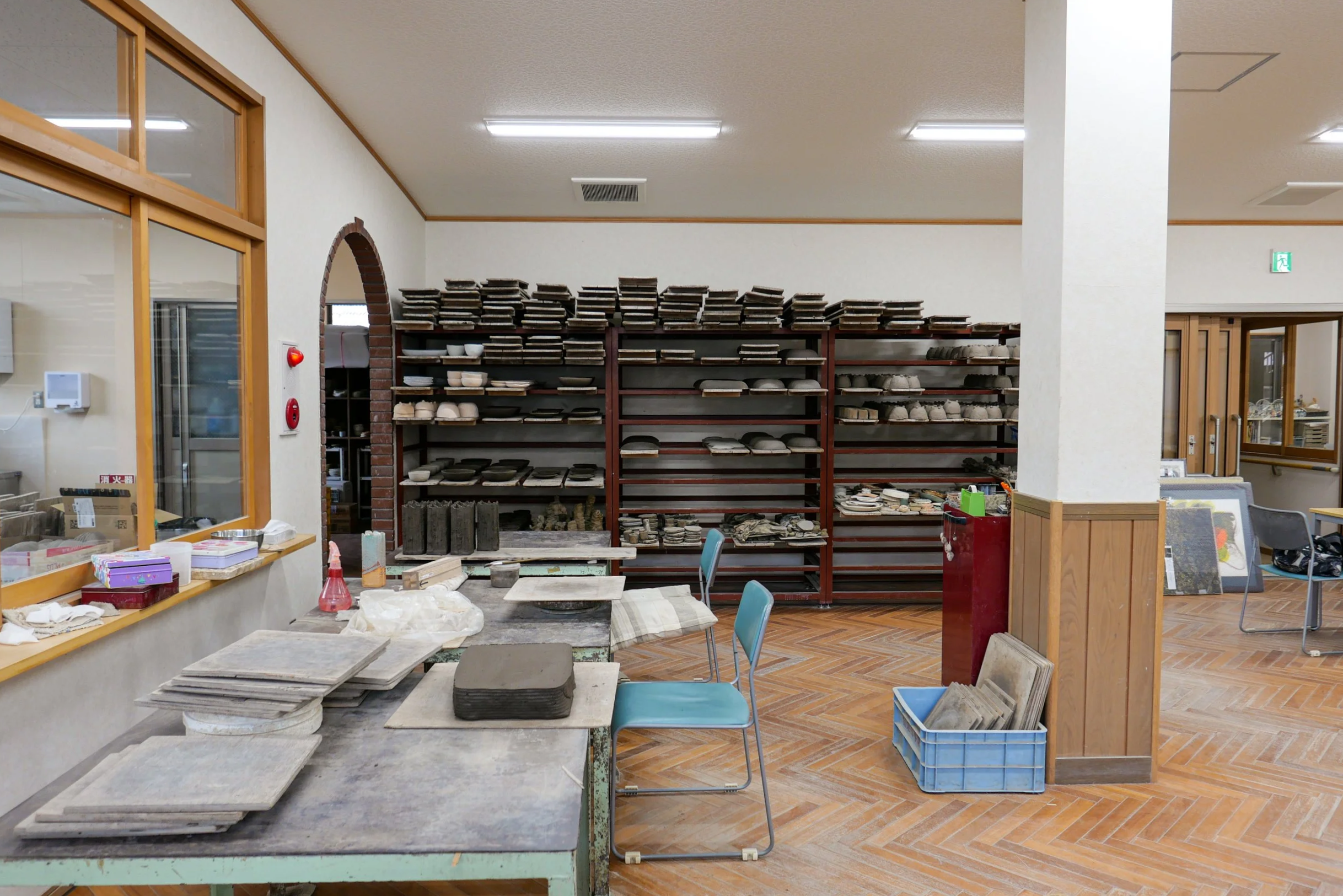
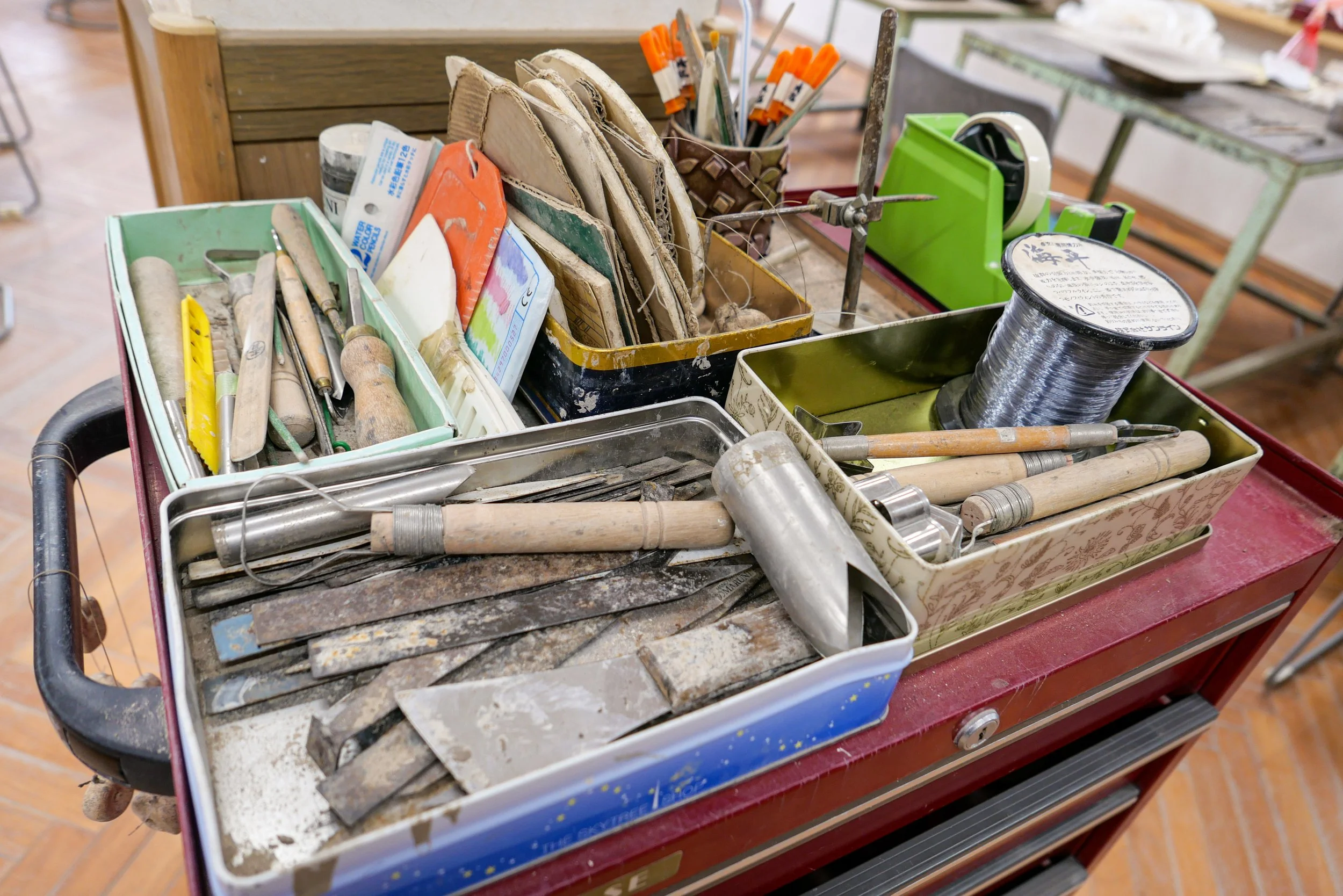
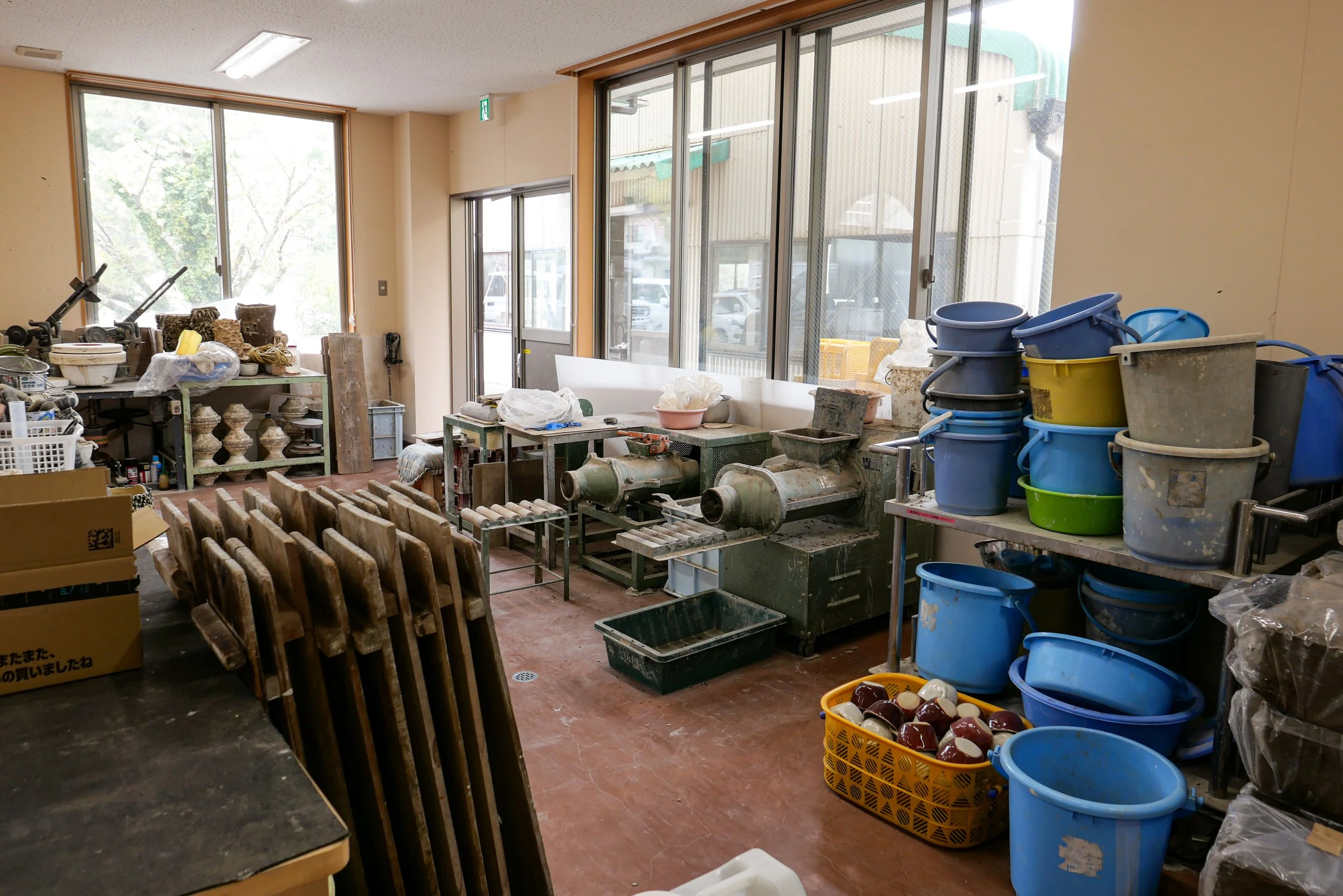
Because so many hands are involved and because each step of the process is done by a different person, every piece that emerges from Shigaraki Seinenryo is unique. The marks of the hands that shaped it remain in the clay. The fire adds its own signature.
Vidro
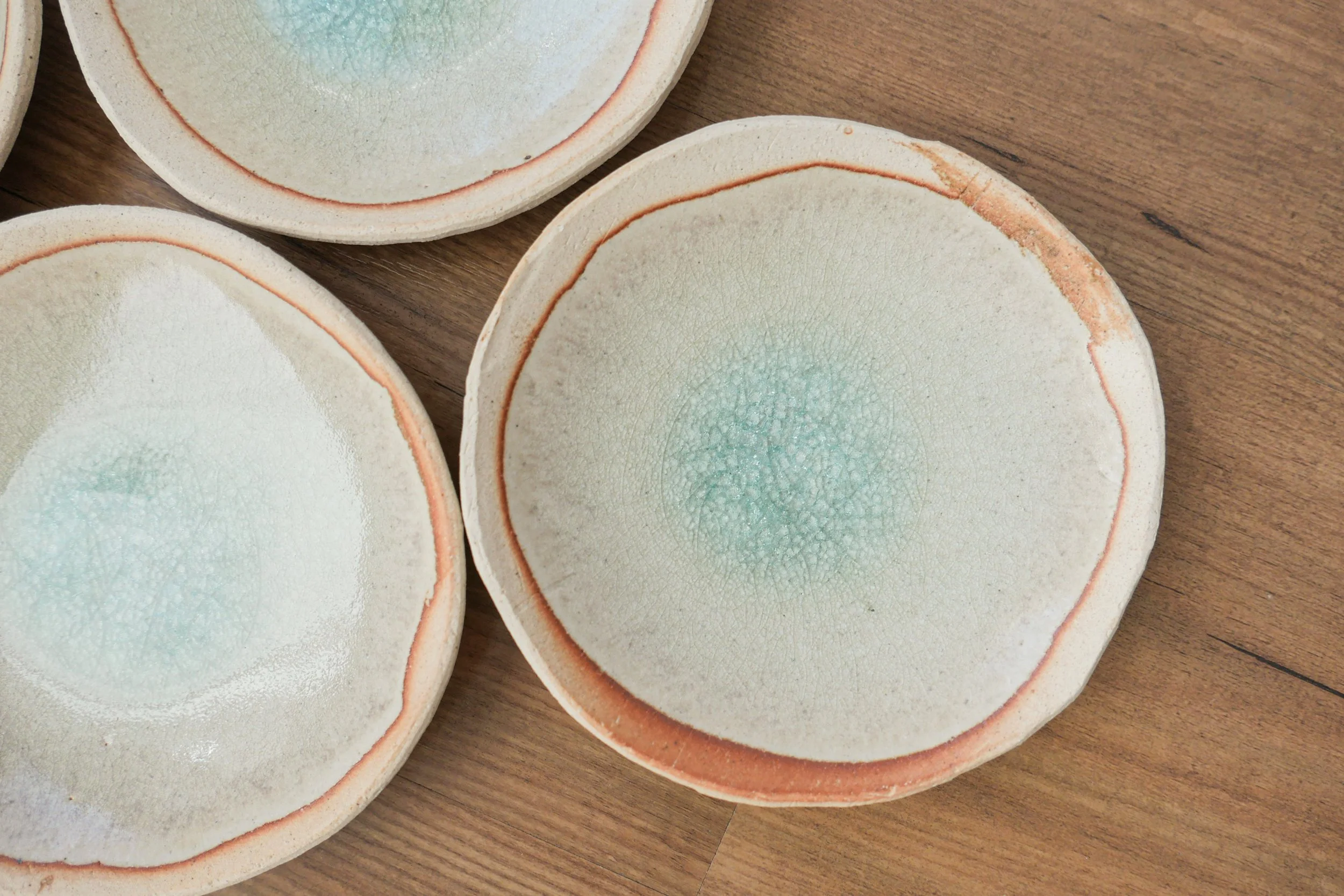
The glaze catches light like the surface of a lake: luminous, shifting, jewel-like. Where glazed, the surface is smooth to the touch; at the rim and base, the raw clay shows through — rough and earthy. No two pieces catch the light in quite the same way. Each one is its own small work of art. It is named after the Portuguese word for glass, vidro, carried to Japan by traders in the 16th century.
Titanium White
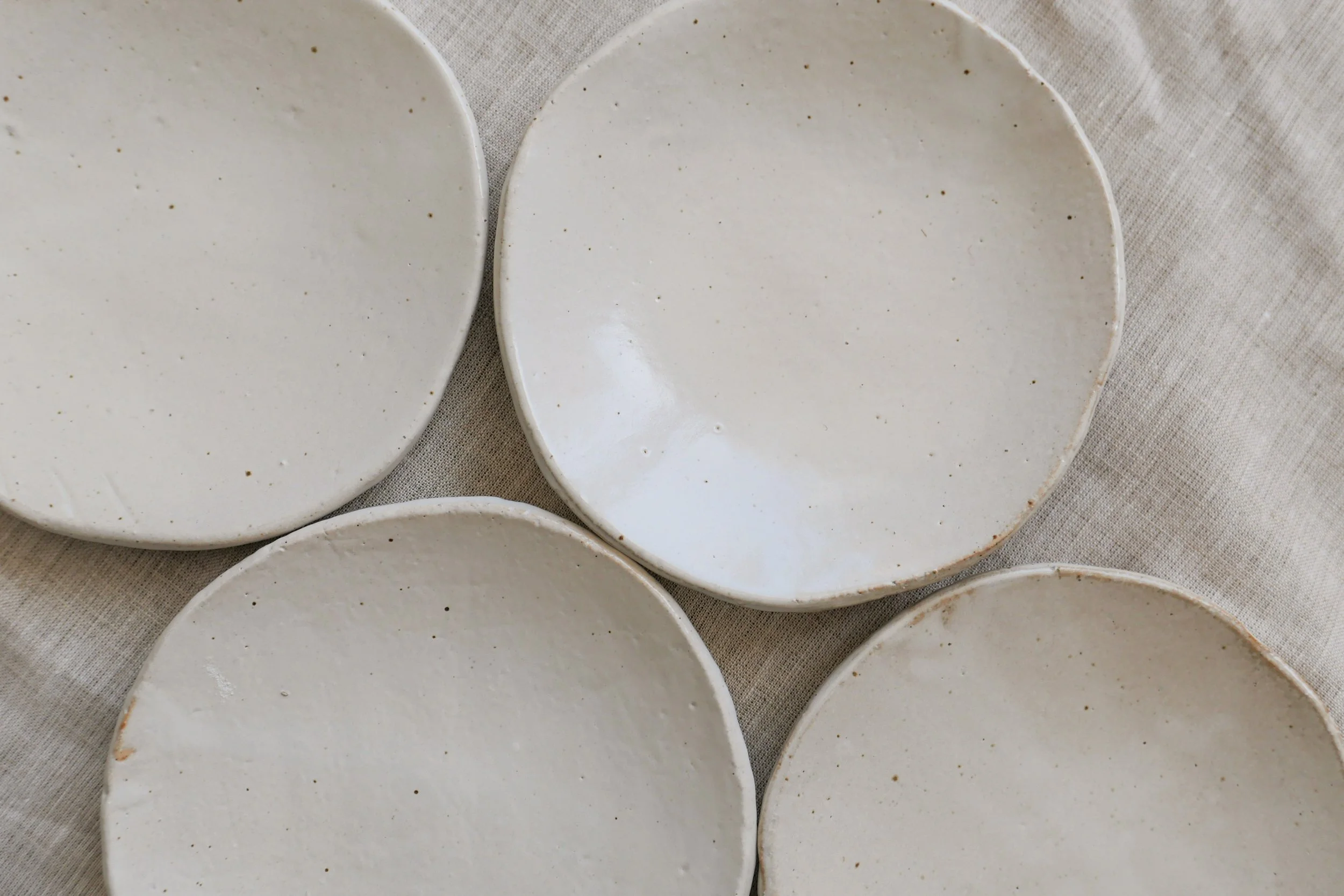
It has a warm, soft, and milky glaze. Of the three, this is the simplest and most understated. It goes with everything. Made for daily use, and better for it.
Hiiro (Scarlet Earth)
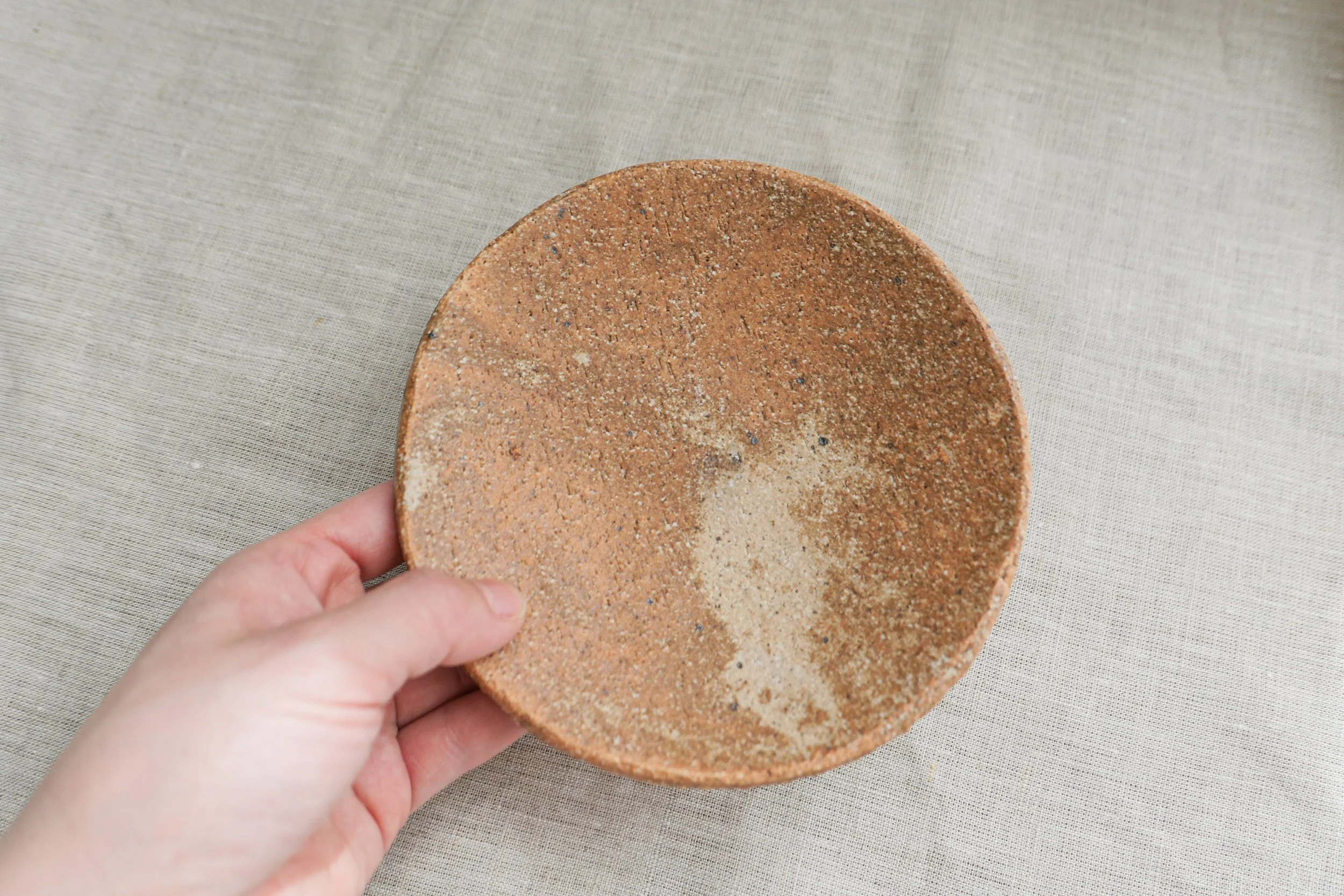
No glaze at all. Instead, the iron naturally present in Shigaraki clay oxidises in the kiln, slowly turning the surface a deep, warm reddish-brown. Rough to the touch, rich to look at. Beautiful as a plate for food, equally at home holding a few pieces of jewellery, a set of keys, or simply sitting on a shelf.
A piece from Shigaraki Seinenryo is not made to be admired from a distance. It is made to be held, used, washed, and used again. And it is those years of use that make the piece more beautiful over time. That is the nature of Shigaraki ware: it is not finished when it leaves the kiln. With every use, every passing year, it grows in beauty.
